Get in touch for your free consultation
Plants for Plympton - Templetonia retusa
A beautiful local plant, and also the logo of our business.
Yarrow
6/30/2026
Templetonia retusa
When we think about what plants to grow where we live - in this case, Plympton, in Tardanya, South Australia, we need to think about the soil, the climate, and the aspect (how much light they need). If we think about these three aspects when choosing plants, then we are giving our gardens a chance to flourish.
In Plympton, along with most of the state, we have a pretty dry climate. The historical rainfall average is over 500mm, but this has not been reached in any years recently. Summers are certainly getting hotter under the impact of climate change, meaning higher evaporation and so less soil moisture. So we will want to grow plants which are adapted to hot and dry climates, to ensure their longer term survival.
Most of Adelaide, including Plympton is a clay soil, which means that drainage is often poor, which means plants like banksias and grevilleas can be difficult to grow, because they are mostly used to sandy soils which drain well.
When we talk about aspect, we are thinking about where in our landscape they are planted. Some plants will grow under in sun or shade, but some will struggle if planted in the wrong place.
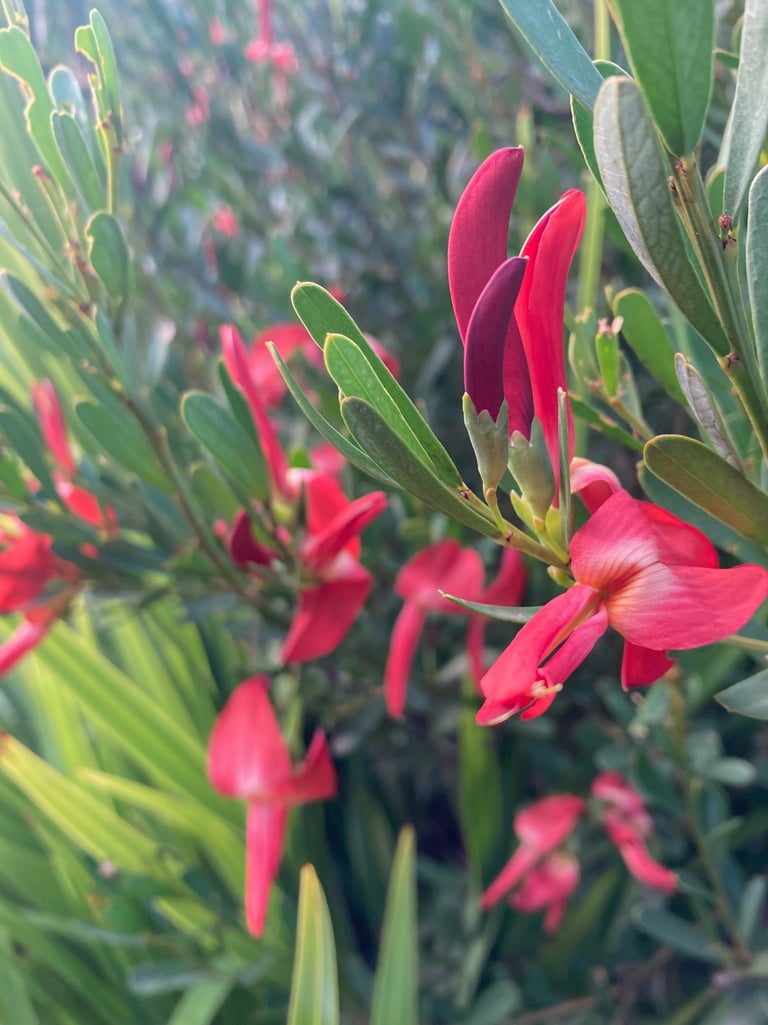
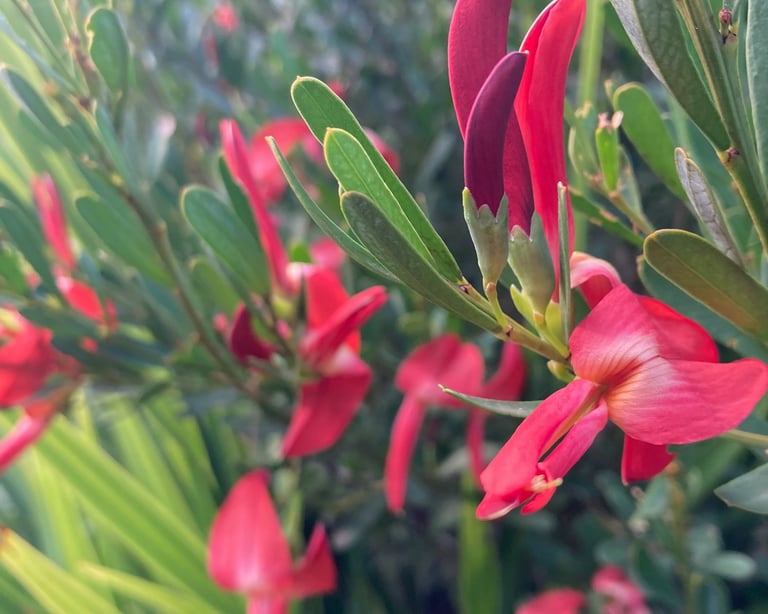
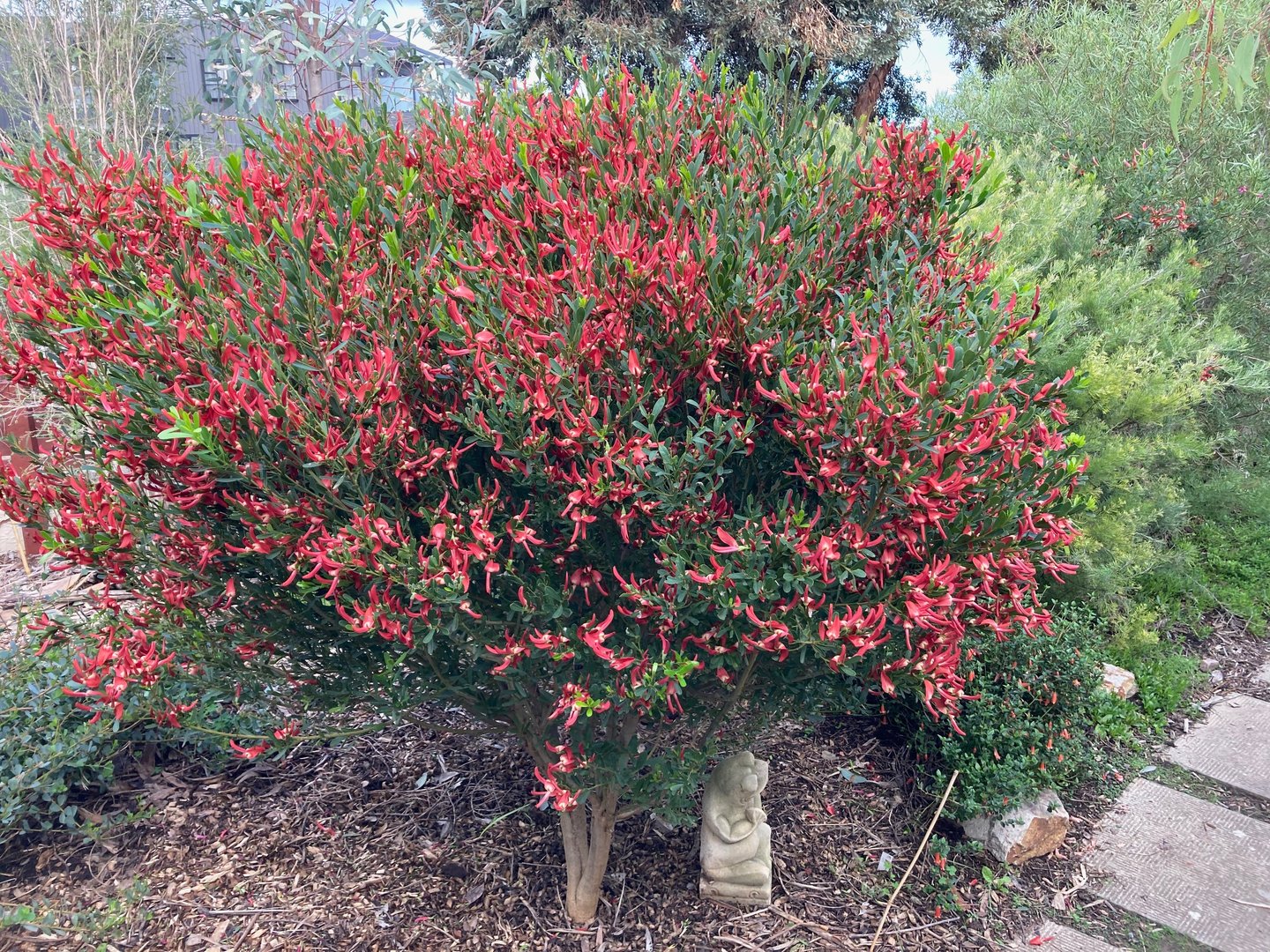
One of my favourite plants is Templetonia retusa, and plant that grows naturally in South Australia and West Australia. It was not commonly found on the Adelaide plains, but further north around the Flinders ranges. As a gardener this plant is special because it has a lovely deep green foliage, and striking red flowers. The flowering seasons is late autumn to early winter, so it is in flower when we most need a cheerful sight in the garden. As a bonus, it is in the pea family, so will fix nitrogen in the soil, adding to its fertility.
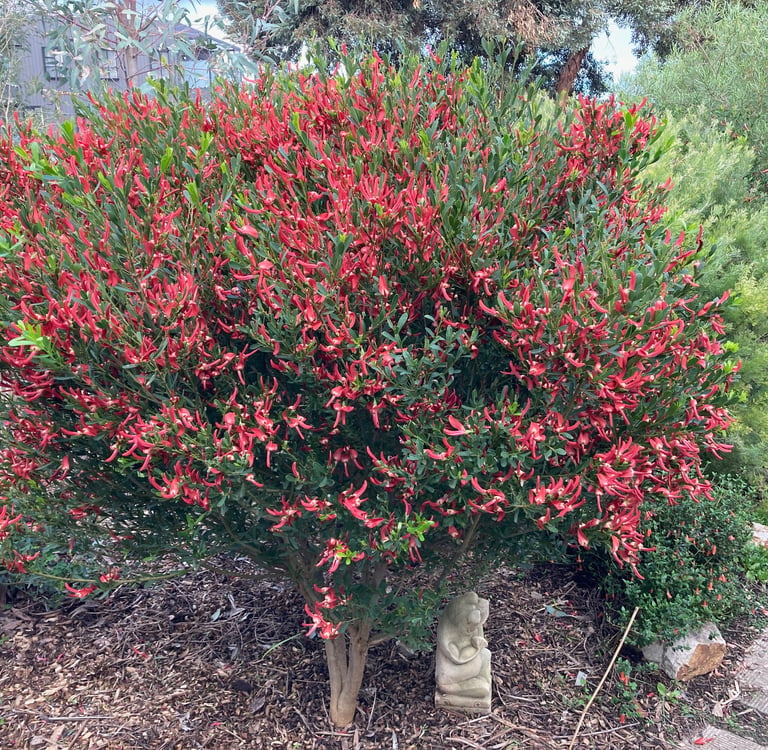
As shown here, it grows to about 2 metres tall, and about 1.5 metres in width, so it would be a good screening plant, or feature in a garden. Birds love this plant when its in flower, particularly the New Holland Honeyeater.
Get in touch
P: 0481 298 768
E: info@fruitfulgardens.com.au